The Glutton’s Guide to Urubamba Pisco Bar: From the Andes to Huntington
Before I even took my seat at Urubamba Pisco Bar in Huntington, my mind drifted south—to the jagged peaks of the Andes, the Pacific’s gray-blue roll against Lima’s cliffs, and the mountain mists rising over ancient terraces. Peruvian cuisine isn’t just about food; it’s an edible chronicle of its geography and people. It’s the product of land and sea, Indigenous roots and immigrant hands—centuries of Andean ingenuity kissed by the Pacific breeze.
It’s no wonder Peru now stands proudly among the world’s culinary titans. Two of the top ten restaurants on earth—Central and Maido, both in Lima—have claimed their places in global rankings, proving that Peruvian cuisine belongs at the very summit of gastronomic excellence.
It was in this spirit—an homage to that national artistry—that I ventured to Urubamba, right here on Long Island, to taste how those same flavors and stories have found a home in Huntington.
A Sip of Purple Legend
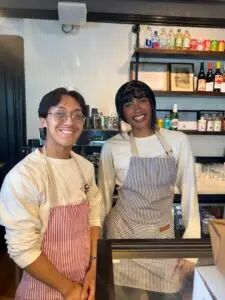
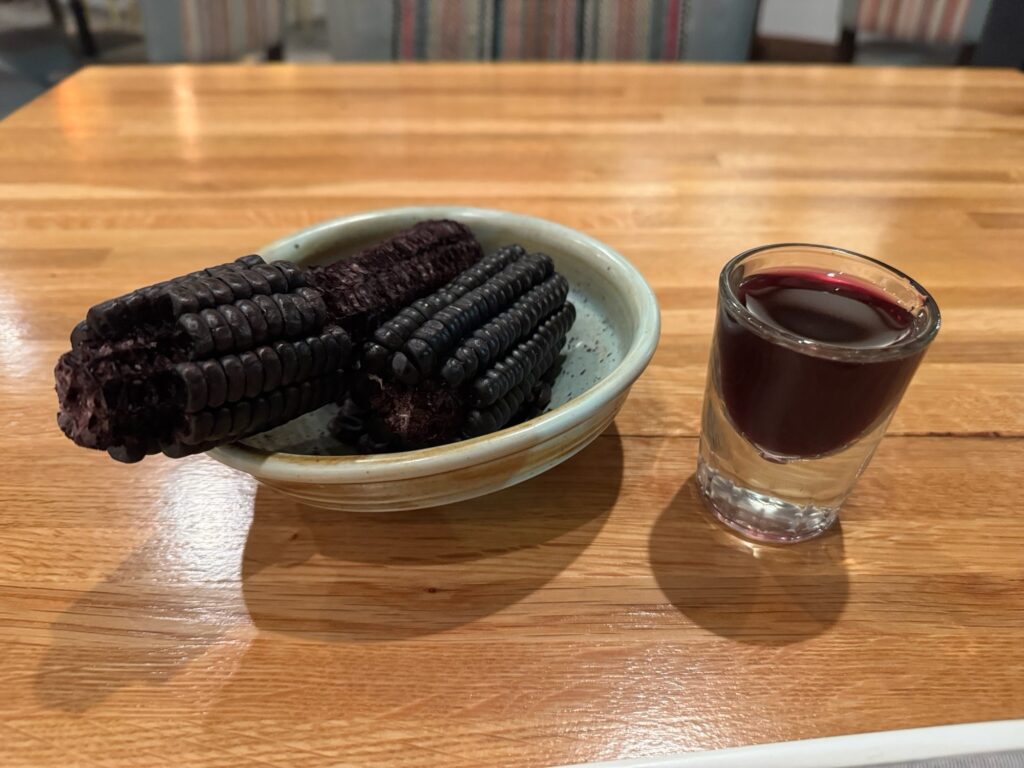
Before the first course arrived, I was greeted by Sigi, the charismatic manager, whose smile had the easy warmth of someone who loves both his work and his guests. He started me off with a shot of chicha morada, that deep violet elixir made from purple corn, pineapple, and cinnamon. As I admired its jewel-toned hue, Sigi leaned in and said, “When I had my birthday on August 1st, that day I turned 147 years old.”
He paused with a smile just long enough for me to wonder if he was serious before adding, “It’s the chicha, my friend. Keeps me young.” I took a sip and believed him. The drink was vibrant, cool, and sweet—like drinking a memory of summer. If youth could be bottled, I thought, it would taste like this.
The Woman Behind the Name
Urubamba’s story begins with Maria Rojas, whose culinary path was shaped over 16 years of apprenticeship under her mother in their Jackson Heights restaurant of the same name. There, she learned the rhythm of a kitchen where recipes were guarded like family heirlooms and where precision lived side by side with love.
Now, in Huntington, Maria carries that legacy forward—each plate a tribute to both her heritage and her mother’s enduring influence.
A Whisper of Folklore to Set the Scene
High above the valleys of the Andes, it’s said the mountain spirit once sent a condor to guide a shepherd to a secret spring where wild chili peppers grew. The shepherd brought them to his village feast, and when the dancers tasted the peppers’ fire, they danced until sunrise.
Thus, so the story goes, the ají amarillo became a sacred bridge between the mountain and the sea—a spark from Pachamama herself. That sense of reverence and fire—the spirit of land and legend—is what Urubamba channels into every bite.
The Ceviche Clásico: a bright coastal blast
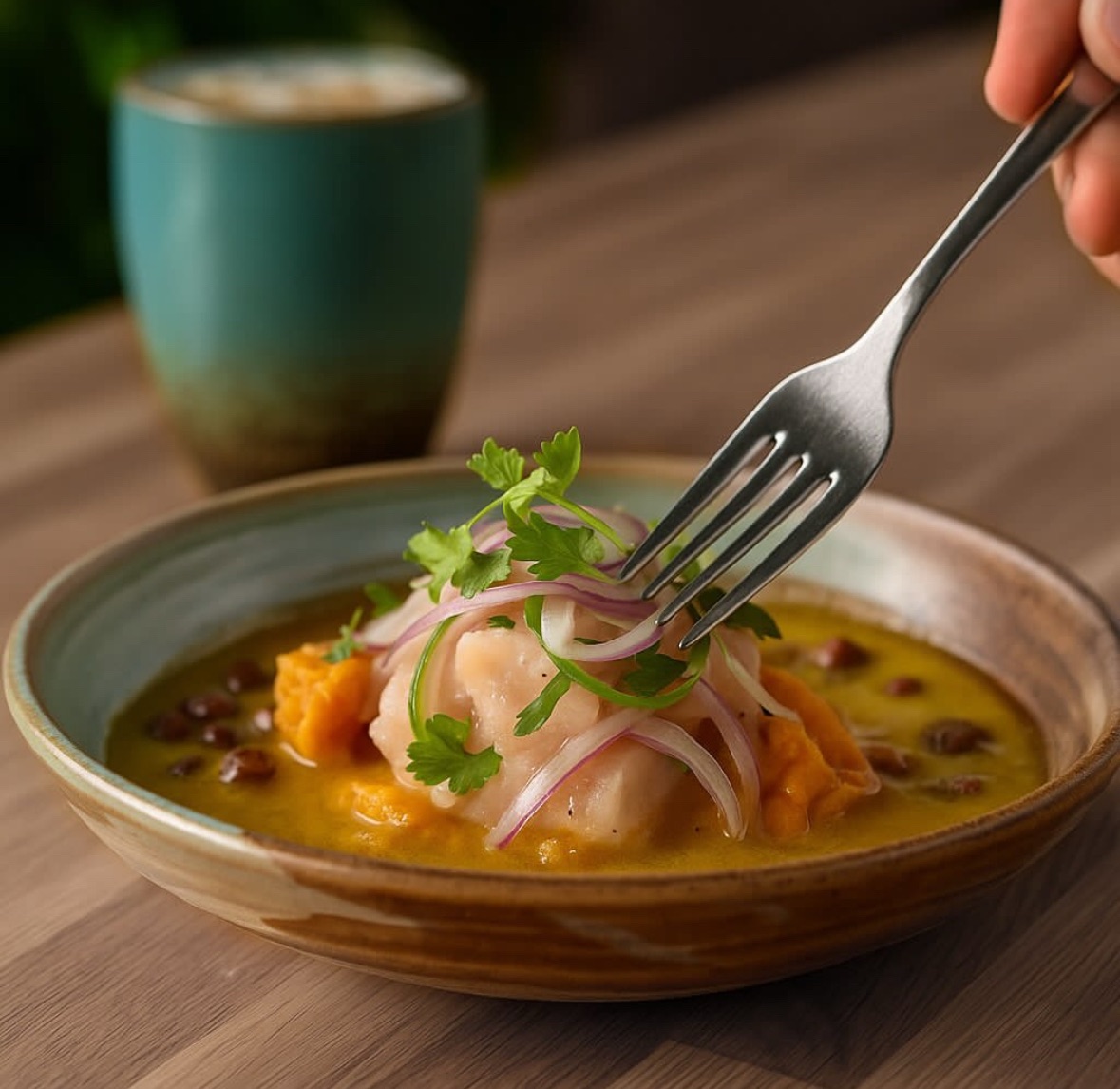
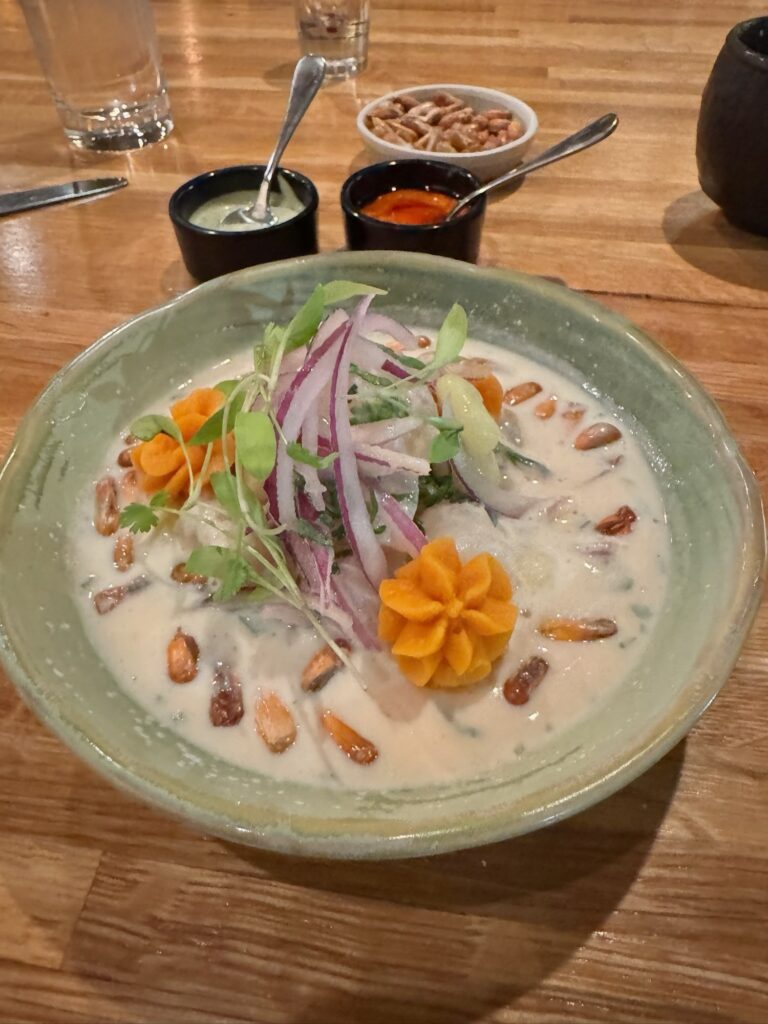
The ceviche clásico arrived like a sunrise on the coast—pearlescent fish bathed in lime, red onions glinting like coral, a shimmer of leche de tigre pooling at the base. Each bite was alive—clean, crisp, and electric. The acidity didn’t overpower; it conducted. You could taste the ocean and the craftsmanship of Lima’s cevicherías in every forkful.
The Grilled Octopus: smoke and sea in harmony
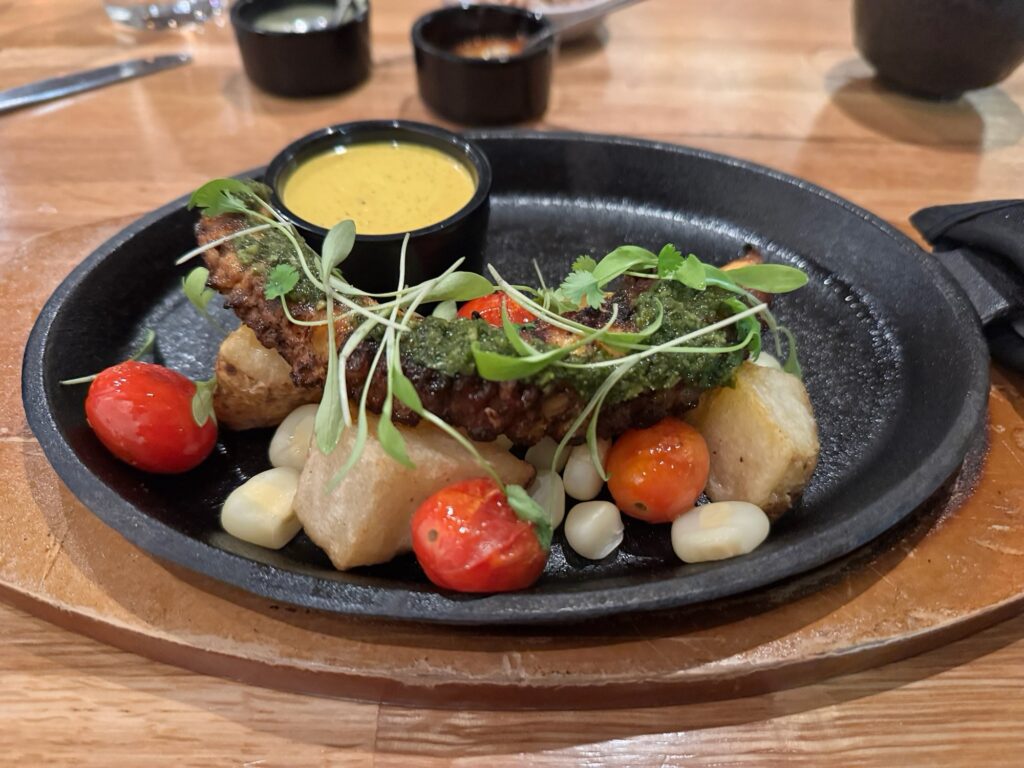
The grilled octopus followed, its charred tentacles arranged with quiet confidence. Perfectly tender, kissed by smoke and olive oil, it told its own story of the Pacific—one of patience, respect, and balance. A squeeze of citrus brightened the salt and smoke, and for a fleeting moment, I could almost hear the surf against Miraflores’ rocks.
Rocoto: where I fell in love
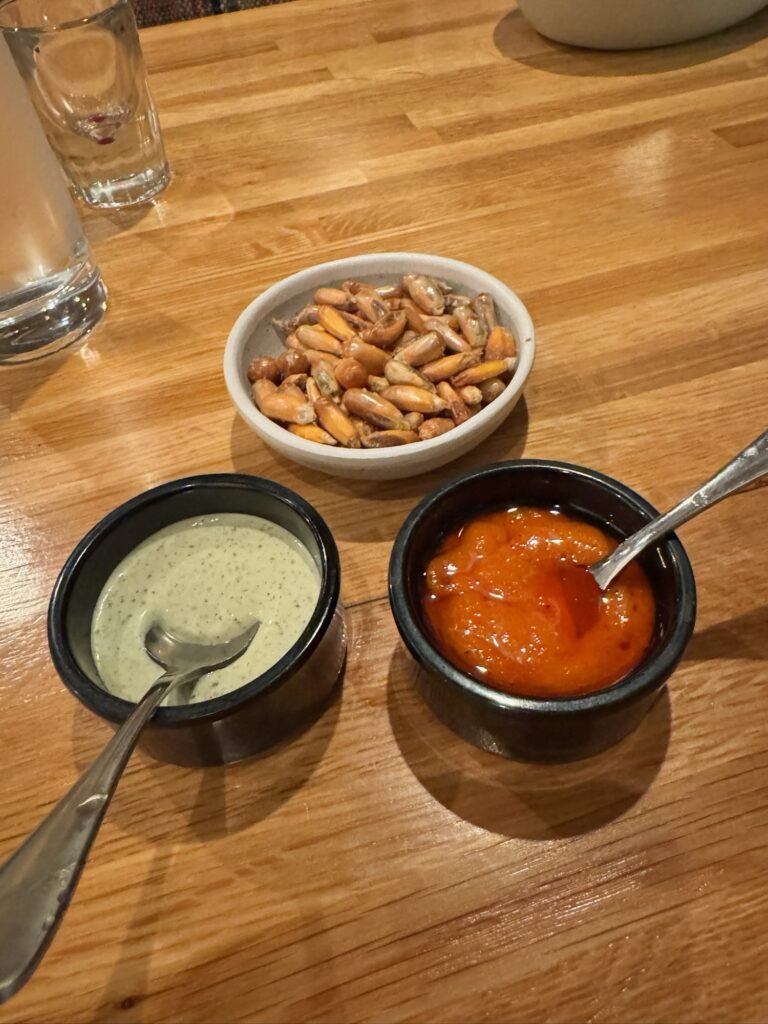
Accompanying the ceviche came the rocotto, the fiery red condiment that made me fall head over heels. Bold, unapologetic, and layered with heat that didn’t scorch but seduced. Dip a bite of octopus or beef into it, and the flavor blooms like sunlight over the Andes—fiery yet fleeting, gone too soon but unforgettable.
For this glutton, it wasn’t just a sauce—it was an awakening. A condiment anchor that is now bound to my soul.
A Culinary Parade of Peru
Urubamba is more than one meal—it’s a journey through the soul of a country, a passport stamped with flavor. Alongside my main courses, I sampled several dishes that painted the full map of Peruvian cuisine:
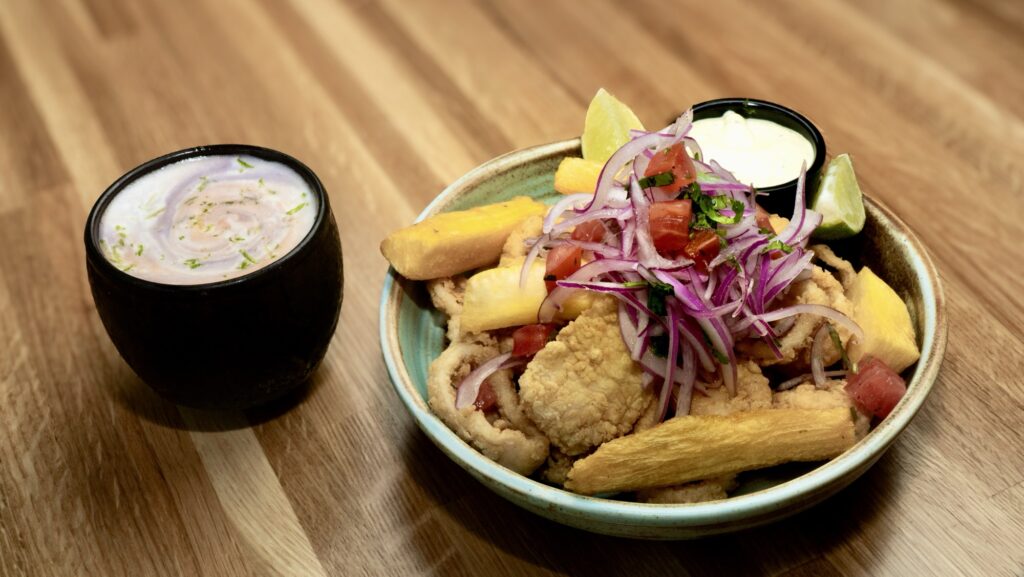
Jalea – a jubilant plate of crispy fish, shrimp, and squid with fried yucca and bright criolla salsa. A celebration of texture and sea.
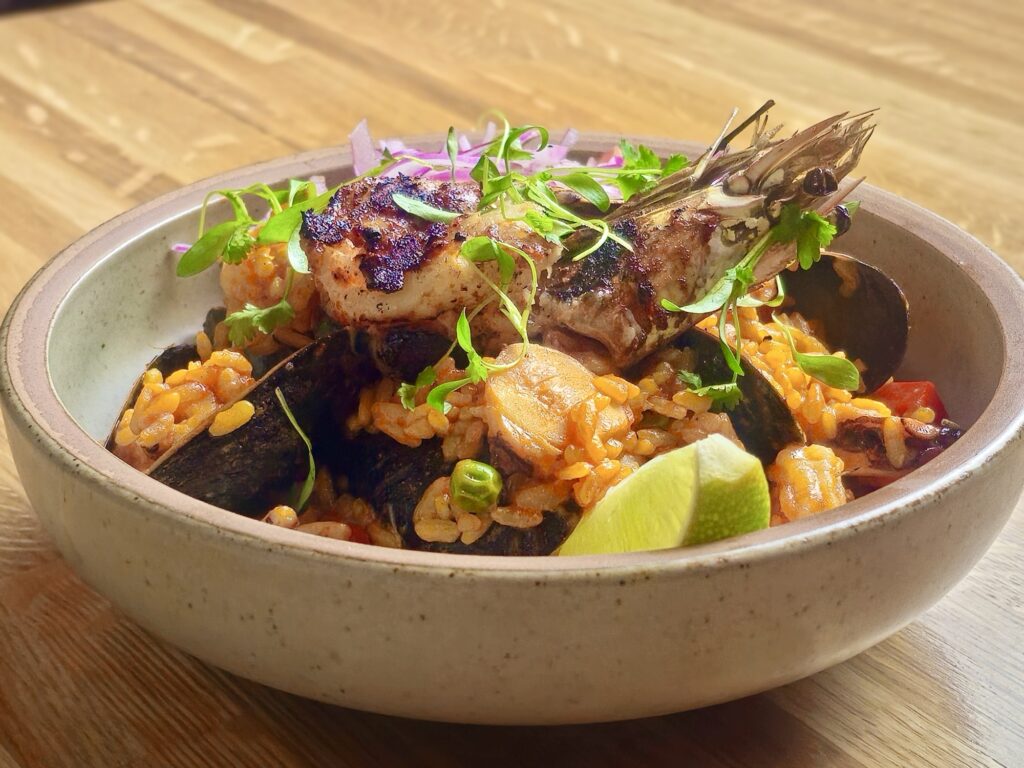
Arroz con Mariscos – Peru’s own version of paella, lush and briny, each grain steeped in saffron-tinged seafood broth.
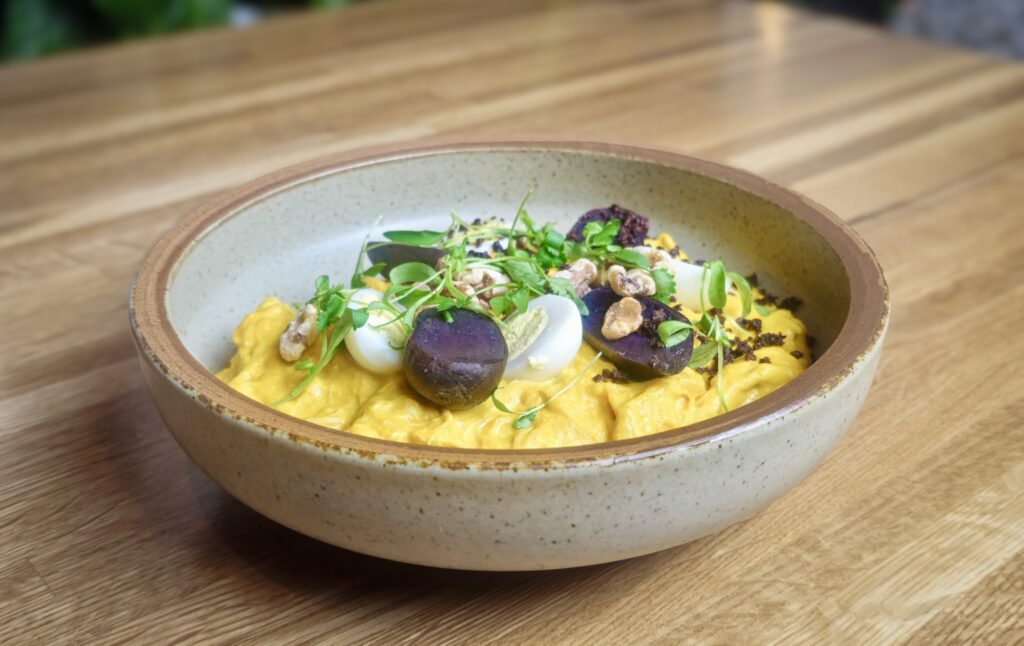
Ají de Gallina – tender shreds of chicken in a golden ají amarillo cream sauce, crowned with quail egg, walnuts, and olive dust—a dish that tastes like home and heritage.
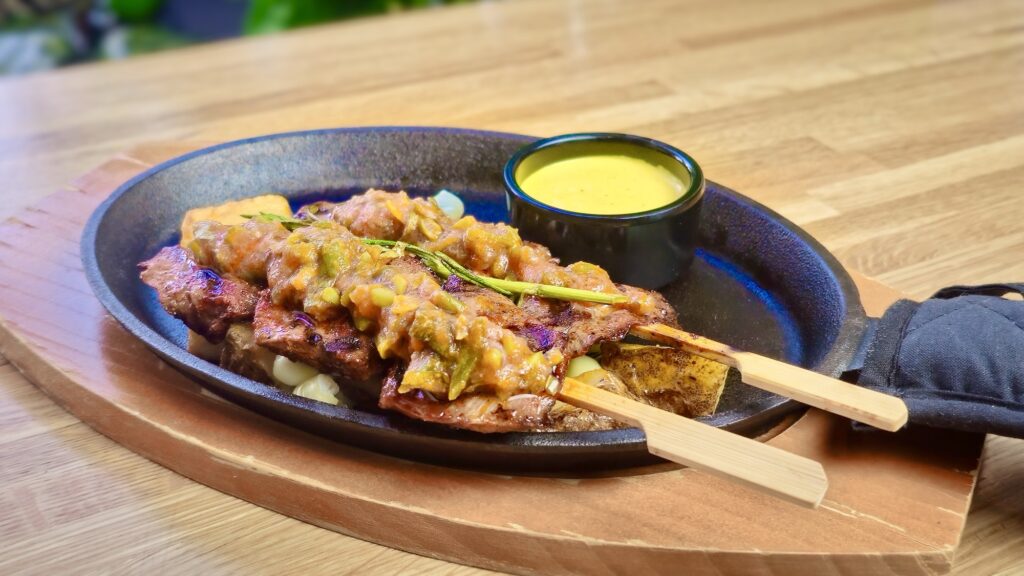
Anticuchos – skewers of veal heart marinated in deep, aromatic spices. Smoky, tender, and primal—the taste of street corners in Lima.
Each plate was distinct, but together they told a single story: Peru’s diversity—mountain, jungle, and coast—harmonized in a single kitchen.
Lomo Saltado: Peru’s beating heart
The lomo saltado is a standard in this cuisine – that perfect marriage of Peruvian soul and Chinese technique, sizzled with joy. Strips of marinated beef, onions, and tomatoes tossed in soy sauce, with crisp potatoes woven right into the mix—chaos and comfort in a single bite. Accompanied by choclo jasmine rice and the sweetest plantains I’ve ever consumed, the flavors visited me again in my dreams that night.


It’s the kind of dish that explains why Peru’s cuisine is beloved: it doesn’t draw lines between cultures; it celebrates their collision.
Where the Spirit of Peru Meets the Glass
And of course—this is a pisco bar, and it would be heresy to leave without surrendering to the art of the cocktail. Beware though – Urubamba does limit their guests on consumption of these treats. That limit is eighteen. No more than eighteen Piscos per guest.
The classic Pisco Sour arrived with a crown of silky foam and a halo of bitters—perfectly balanced between tart and floral, with that unmistakable pisco brightness that flirts between lime and wildflower. Each sip was smooth as silk, light as air, and brimming with the spirit of Lima.
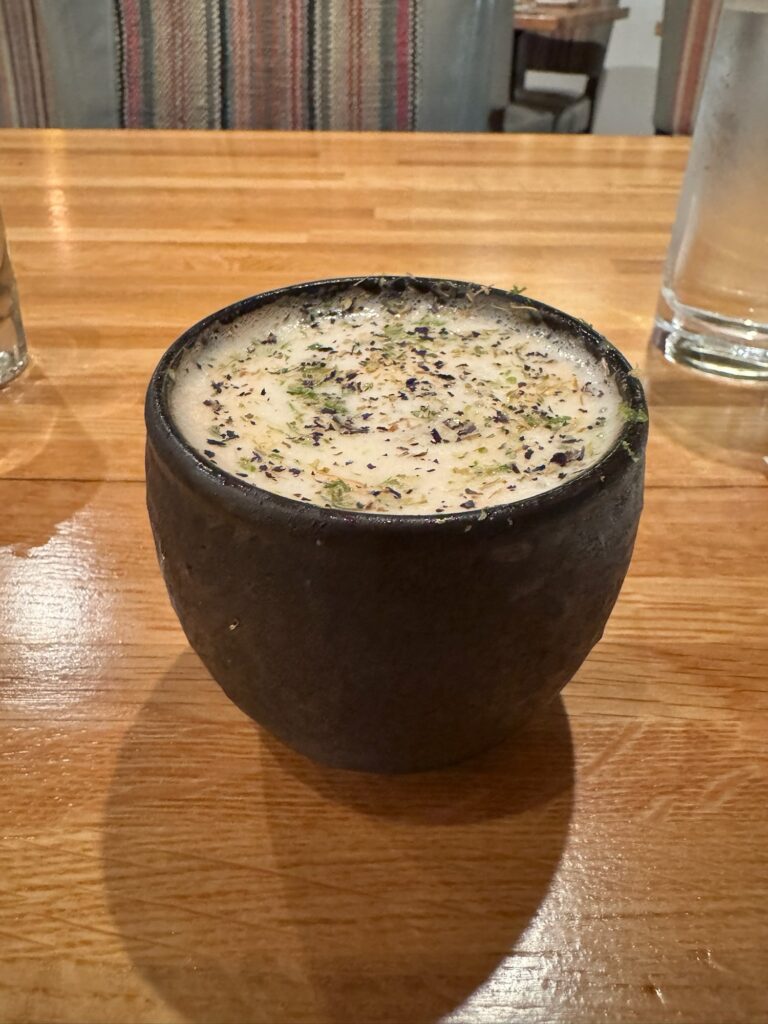
Then came its darker cousin, the Uru Sour—a mysterious and masterful twist that wove together black whiskey, elderflower, kaffir lime, yuzu, and that same pillowy egg white. Smoky yet citrusy, exotic yet comforting—it was as if the Andes themselves had learned to mix a drink.
Their sangria was equally stunning: lush, generous, and fragrant with ripe fruit and spice, while the craft cocktail list read like a love letter to experimentation and balance. Each glass was its own story—crafted, composed, and worthy of the same reverence as the cuisine it accompanies.
Chirimoya Dreams: Twain’s tropical muse
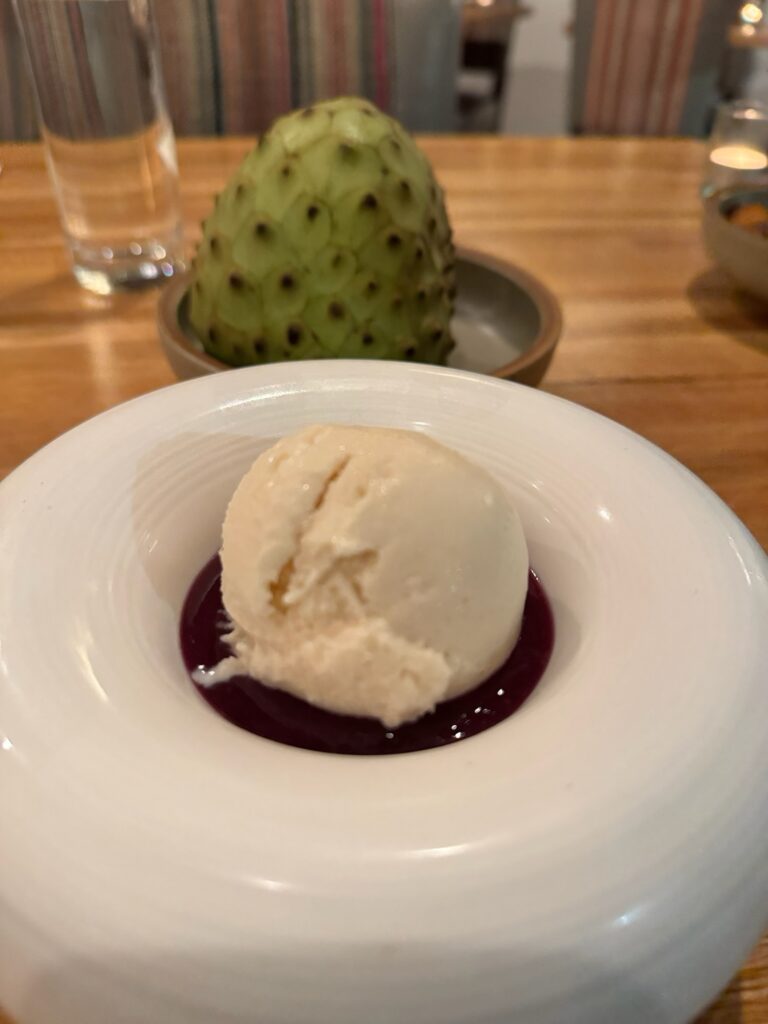
And then came dessert—a scoop of house-made cherimoya ice cream, so fragrant and velvety it could have been spun from a dream. The chirimoya—sometimes called the “custard apple”—is a fruit native to the Andean valleys, and none other than Mark Twain once declared it “the most delicious fruit known to men.” He wrote of it with the reverence of a poet tasting paradise for the first time: the flesh “soft as a breeze,” its perfume “like a marriage between banana and pineapple, with a whisper of strawberry.”
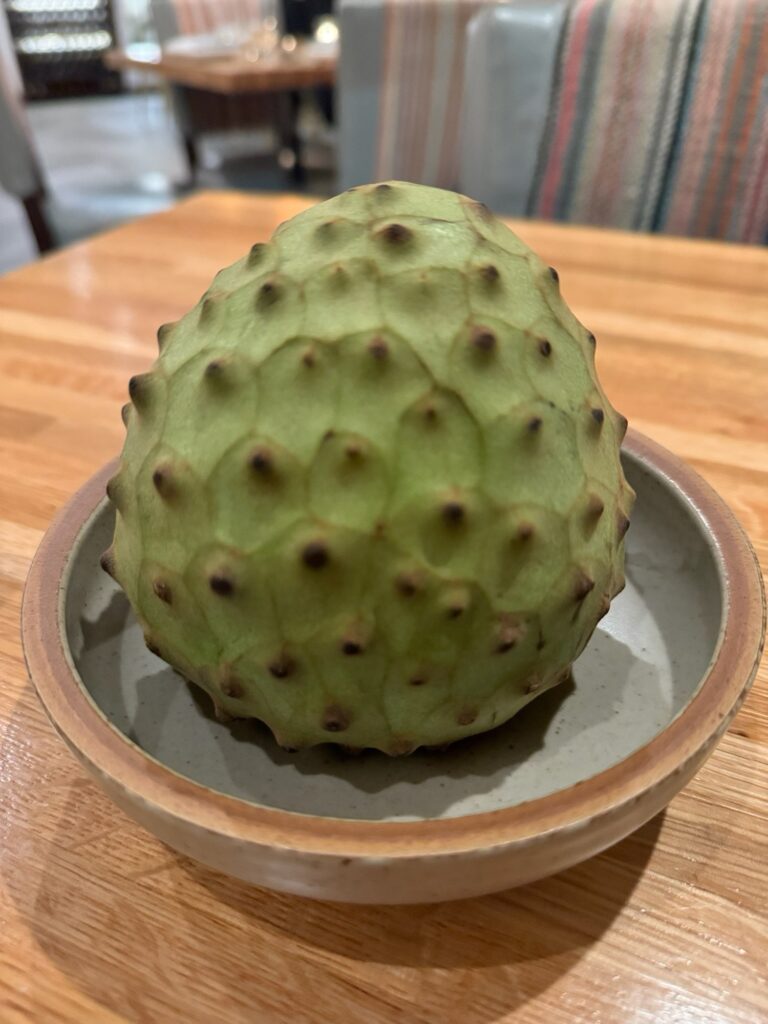
As I tasted Urubamba’s chirimoya ice cream, I understood Twain’s awe. It wasn’t just fruit—it was nostalgia in flavor form, like a lullaby sung by the Andes themselves. Sweet, floral, and impossibly smooth, it ended the meal on a note of grace and wonder.
And because Maria knows how to end on a crescendo, I also tasted the Lúcuma Panna Cotta, rich with the caramelized sweetness of South America’s native fruit, and a spoon of Mazamorra Morada, a traditional purple corn pudding that shimmered like the evening sky over Cusco.
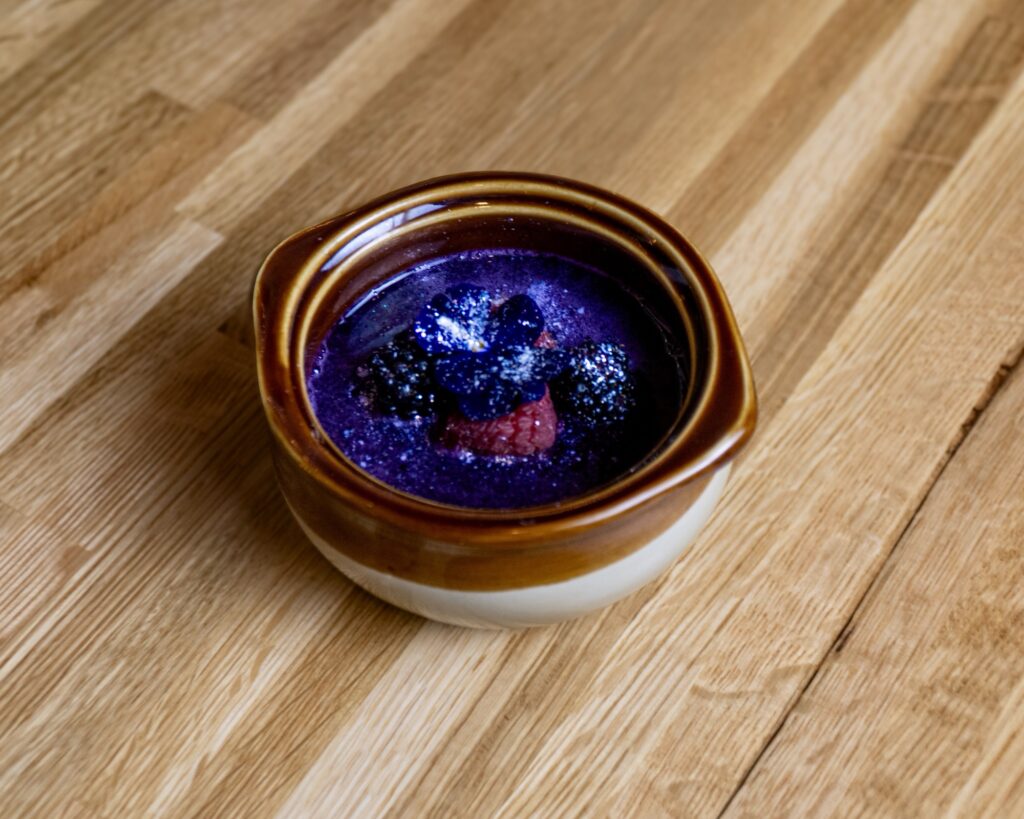
Together, they were dessert as poetry—heritage made sweet.
Final Thoughts from Your Glutton about Urubamba
As a glutton, I came hungry for food—but left full of story. From Sigi’s eternal youth potion to Maria Rojas’ family-forged recipes, from ceviche’s coastal clarity to rocoto’s volcanic soul, Urubamba Pisco Bar is not just a restaurant—it’s a passageway to Peru itself.
Each dish—and each cocktail—reminded me that cuisine, when crafted with care and love, is never just sustenance. It’s memory, magic, and sometimes, a little mischief. And if I wake up tomorrow feeling even a fraction as young as Sigi’s 147 years—well, I’ll know the chicha’s working.